
The world's top brands across sectors might lose between $93 billion and $223 billion because of a data breach, a first-of-its-kind study by Interbrand and Infosys, called 'Invisible Tech, Real Impact', has found. This represents 4-9.6 per cent of their cumulative value. The study gains significance in the backdrop of yet another massive hack, this time of Microsoft's email software, which is estimated to have affected at least 60,000 known victims globally, according to Bloomberg. The study found that there is a long-term impact of data breaches on brands across sectors.

'The hackers' objectives were centred around smearing India's reputation, causing productivity loss, creating operational damage and seeking financial gains.'

Nandigram, 126 km south of Kolkata, is Suvendu Adhikari's bastion, where he has vowed to defeat Mamata Banerjee by 50,000 votes or quit politics.

Within two days, the business school had 108 recruiters making 370 domestic and international offers, including 23 new final recruiters with an average salary of Rs 25.08 lakh.

Positive cues from China - which accounts for 56.5 per cent of global crude steel production - are likely to keep demand-supply in balance and provide support to prices. All eyes have been on China, which opened after New Year holidays, as it was widely expected that prices would recover post-holidays after the weakness in January. Jayanta Roy, senior vice president, ICRA pointed out, barring last year when Covid-related restrictions affected China's steel demand in February 2020, historical trends show a typical upward movement in steel prices post-new year festivities. China's opening post-holidays was keenly awaited, especially in the wake of the sluggishness in the market in January.

Tata Steel delivered one of its best financial performances ever in the third quarter of the current financial year, and surpassed its deleveraging target of $1 billion. In an interview, Koushik Chatterjee, executive director and chief financial officer, Tata Steel, tells Ishita Ayan Dutt that the company will continue to focus on deleveraging but profitable and value-added growth will be equally important.

Against the backdrop of the Lok Sabha results, a much larger scale of desertion was anticipated from the TMC. 'It seems, people don't believe that the ship is sinking.'

For Q4CY20, PC shipments grew by 27 per cent year-on-year, said data from the IDC.

Pawan Ruia has finally done it, a beaming Buddhadeb Bhattacharjee, then West Bengal chief minister, had said at the reopening of the 70-year-old Sahagunj factory owned by Dunlop in 2005. But with the Calcutta high court passing a winding-up order in 2013 and the Trinamool Congress-led state government passing a Bill to take over the company in 2016, the once-upon-a-time undisputed leader in the Indian tyre industry looks vastly undone. But that can hardly be a deterrent for Ruia, who has a penchant for making headlines one way or the other.

The deal, which is expected to close in the next four to five weeks, will give exit to investors Alibaba, Abraaj Group and IFC. The parties are awaiting approval from the Competition Commission of India (CCI).

The first half of the year (H1-2020) was marked by sluggish growth with demand down 26 per cent YoY, while the second half saw recovery. H2-2020 recovered with 19 per cent YoY growth, reports Shivani Shinde.

TCS, Infosys ramp up onshore hiring; Infosys committed to hire 25,000 over 5 years.

Spiraling steel prices led the government to cut customs duty by 2.5-5.5 per cent on a range of products from semi-finished to flat and long products for the benefit of MSMEs, that have been at the receiving end.

In power, Mamata Banerjee has tried to bury the ghost of the past, but it might still be work-in-progress. Big-ticket and eye-grabbing (in terms of investment size) projects are still few and far between, reports Ishita Ayan Dutt.
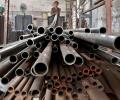
A primary producer said that the prices would be raised in tranches this month and the total increase could be Rs 6,000 a tonne.
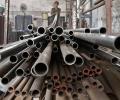
The closure of BPSL would add about three million tonnes capacity to JSW Steel's existing 18 million tonnes.

Each state has its own weak areas that need attention. Some states have already identified the gaps and sought the Centre's help. Vinay Umarji, Ishita Ayan Dutt, Samreen Ahmad and Sohini Das report.

Over the past few months, FMCG companies redefined their "fairness" offerings to make them more inclusive in the backdrop of the global movement "BlackLivesMatter".

While companies have not launched too many products in rural areas of late, easy financing has helped push up demand.
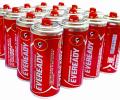
As imports reduced, Eveready clocked significant volume growth in batteries.
 © 2026 Rediff.com - Advertise with us - Disclaimer - Privacy Policy - Sitemap - Feedback - About us - Terms of use - Grievances